
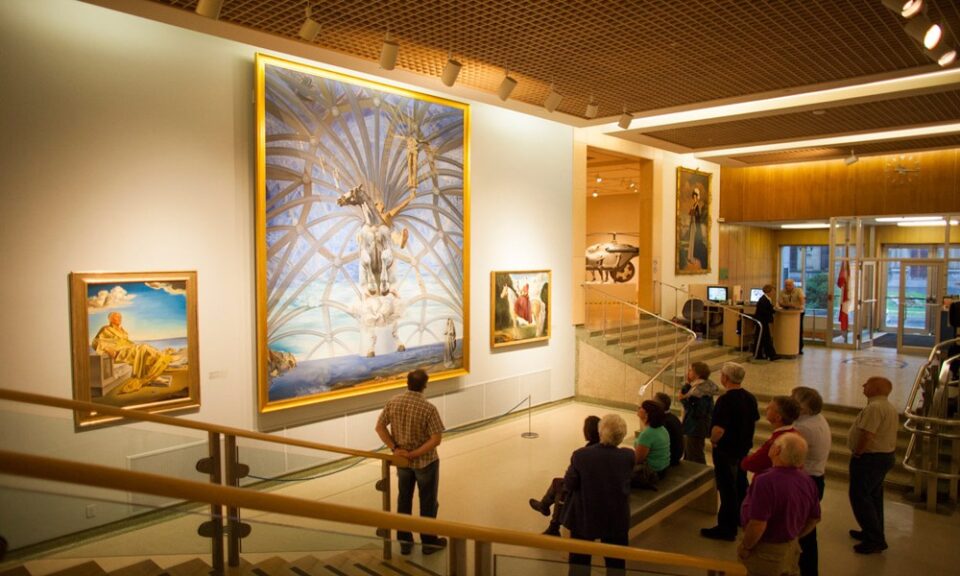
National art institutions hold a position that goes well past object storage or display. Consistent commitment by institutions is essential for public access, professional preservation, and reinterpretation of creative output. Judy Schulich‘s engagement with these spaces signals that galleries require sustained private investment alongside public funding. Art collections within major institutions are more than records of work. They establish what a society considers worth keeping, worth displaying, and worth contesting over time.
Pre-Confederation works sitting alongside contemporary installations did not accumulate without direction. Curatorial decisions made across decades each add to a larger picture of what this country has produced artistically. Institutions maintaining that breadth offer something a single exhibition cannot works in conversation with one another across time, where a visitor standing between pieces becomes part of an exchange that predates their presence and will continue after it.
How does access shape participation?
Public access to national collections is the central obligation of any major institution, not a secondary consideration. A gallery restricting who can encounter its holdings fails the very purpose it was established to serve. The AGO describes its mission as enriching lives through art and learning, drawing community together, and extending cultural impact beyond its immediate location. That mission rests entirely on who can walk through the doors and what they find once inside.
Cultural institutions engage a variety of populations. Visits to galleries vary from students to working adults to recent arrivals to long-term residents. School access, evening sessions, multilingual materials, and exhibitions that rotate without replacing permanent works enable institutions to reach a wider range of people. An open door does not necessarily lead to cultural enrichment. It follows from deliberate design around who those doors are actually open to.
Permanent works over rotating shows
The gap between a temporary exhibition and a permanent collection is not administrative. It carries real weight for how institutions function as cultural resources.
- Permanent works allow visitors to return at different points in their lives and encounter the same piece with a fresh perspective.
- Artists whose work enters a permanent collection gain a position in the national record that commercial exhibitions cannot replicate.
- Curators, researchers, and educators draw on permanent holdings as reference points that rotating shows cannot provide.
- Stable collections maintain institutional continuity when exhibitions change, keeping the gallery a reliable resource across decades.
Temporary shows draw audiences. Permanent holdings build the foundation that those audiences return to. Both serve distinct purposes, and institutions investing in each provide something more durable than either delivers on its own.
Professional staff sustaining collections
Conservation, documentation, and contextualisation of works entering national collections don’t end with acquisition. Age-appropriate framing may be needed to speak clearly to a certain audience. Institutions postpone rather than prevent deterioration by acquiring without maintaining. Staff carrying out this work operate with little public visibility. The output of their effort is that pieces produced far in the past remain legible to present audiences, presented with enough context to be encountered directly rather than observed from a distance.
What enriches cultural life is not creation alone. It is what gets preserved, kept accessible, and returned to repeatedly across time. Institutions meeting that standard become the most dependable record of what a country has made and who made it.
